Water Matic Systems

What is Deficit Irrigation?

Introduction

In an era where water scarcity poses a growing threat to global agriculture, innovative irrigation practices are essential to sustain food production while conserving precious resources. Deficit irrigation (DI) has emerged as a promising strategy, allowing farmers to optimize water use without significantly compromising crop yields. Universities across the United States and Canada have conducted extensive research to understand and promote this technique, contributing valuable insights to modern agricultural practices. This article, drawing on the collective expertise of academic institutions, explores the concept of deficit irrigation, its benefits, challenges, and practical applications. Spanning topics from water efficiency to real-world case studies, it aims to provide a comprehensive guide for farmers, researchers, and policymakers navigating the complexities of sustainable agriculture.

Why Water Efficiency Matters in Modern Agriculture

Water is the lifeblood of agriculture, accounting for approximately 70% of global freshwater withdrawals, as noted by agricultural experts. In the U.S. and Canada, where irrigated agriculture supports over 54% of crop sales despite covering less than 20% of harvested cropland, efficient water use is critical. Climate change, population growth, and competing industrial demands have intensified water scarcity, particularly in arid regions like California and the Prairie provinces. Traditional irrigation methods often lead to overwatering, wasting resources and increasing soil salinity, which threatens long-term sustainability. Water efficiency matters because it enhances crop productivity per unit of water, reduces environmental degradation, and ensures food security in a world where freshwater is increasingly limited. Universities emphasize that without adopting efficient practices, agriculture risks exacerbating water stress, necessitating a shift toward strategies like deficit irrigation.

What is Deficit Irrigation?

YOU MIGHT BE INTERESTED IN 
(Smart Irrigation)

What is Deficit Irrigation? A Simple Explanation

Deficit irrigation is an irrigation management strategy where crops receive less water than their full evapotranspiration (ET) requirement, intentionally subjecting them to a controlled level of water stress. Unlike traditional full irrigation, which aims to maximize yield by meeting all water needs, DI focuses on optimizing water use efficiency (WUE) by applying water strategically, often during specific growth stages. Research from institutions like the University of California, Davis, and the University of Guelph highlights that this approach can maintain acceptable yields while saving significant water volumes. For instance, DI might involve reducing water supply during less sensitive growth phases, such as vegetative growth, while ensuring adequate hydration during flowering or fruit development. The technique requires a deep understanding of crop physiology and local conditions, making it a science-driven practice supported by academic studies.

Benefits of Deficit Irrigation

The benefits of deficit irrigation are well-documented by North American universities. Firstly, it conserves water, a critical advantage in regions facing scarcity. Studies indicate that DI can save up to 75% of irrigation water without substantial yield loss, as seen in experiments with sweet corn and green beans. Secondly, it improves water use efficiency, allowing farmers to produce more crop per drop—up to 1.2 times higher WUE under a 25% deficit, according to research from Cukurova University, adapted by Canadian studies. Thirdly, DI can enhance fruit quality in tree crops like peaches and citrus, where controlled stress improves sugar content and firmness, a finding pioneered by researchers at the University of California. Additionally, it reduces energy costs associated with pumping and distribution, offering economic benefits. These advantages make DI a viable tool for sustainable farming, as endorsed by agricultural science programs.

1

Crops That Respond Well to Deficit Irrigation

Not all crops are equally suited to deficit irrigation, and university research has identified those that thrive under controlled water stress. Cotton, maize, wheat, sunflower, sugar beet, and potato are among the field crops that respond well when DI is applied throughout the growing season or at specific stages. For instance, cotton and maize exhibit lower yield response factors (ky < 1.0), meaning their yield reduction is minimal compared to the water deficit imposed. Legumes like groundnut, soybean, and common bean also perform well when stress is limited to certain growth phases, such as pre-flowering. Fruit trees and vines, including peaches and citrus, benefit from regulated deficit irrigation (RDI), a variant of DI, which controls vegetative growth to boost fruit quality. These findings, supported by experiments at institutions like the University of Nebraska and the University of British Columbia, guide farmers in crop selection for DI implementation.

Risks and Challenges of Deficit Irrigation

Despite its benefits, deficit irrigation presents risks and challenges that require careful management. One major concern is the potential for increased soil salinity due to reduced leaching, which can degrade soil health over time, as noted by researchers at the University of Arizona. Yield variability is another risk, particularly if water stress occurs during critical growth stages like pollination, leading to unpredictable losses. The technique demands precise knowledge of crop water needs and local climate, which can be a barrier for farmers without access to advanced tools or expertise. Additionally, over-reliance on DI without proper monitoring may lead to long-term stand decline in perennial crops like alfalfa, as observed in studies from Cordoba, Spain, adapted by Canadian researchers. Universities stress the need for integrated approaches, combining DI with soil management practices to mitigate these challenges.

3

YOU MIGHT BE INTERESTED IN 
(Smart Irrigation with IoT)

How Smart Irrigation Systems Enhance Deficit Irrigation

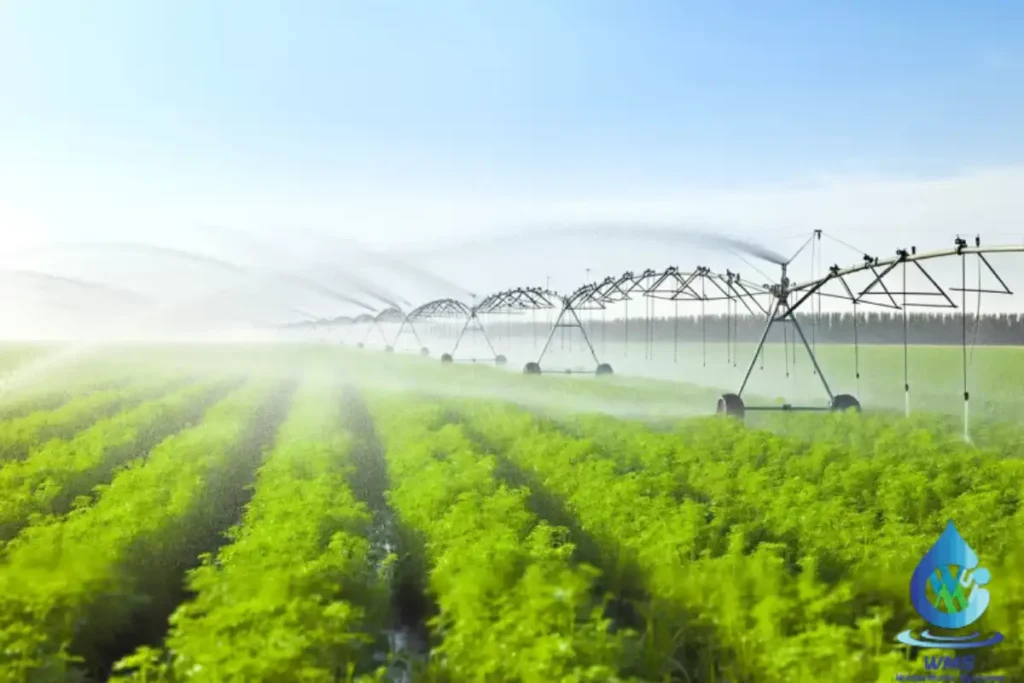
Smart irrigation systems, integrating technologies like soil moisture sensors, weather stations, and decision support tools, significantly enhance the effectiveness of deficit irrigation. Research from the University of Florida and McGill University highlights how precision irrigation water-saving systems (PISs) deliver water precisely where and when needed, based on real-time data. Soil moisture sensors detect plant water uptake, while variable rate irrigation (VRI) adjusts application rates, optimizing DI schedules. Wireless communication and artificial intelligence further refine these systems, predicting water needs and reducing waste. For example, the Decision Support System for Agrotechnology Transfer (DSSAT) model has successfully simulated yield responses under DI, aiding water management decisions. These technologies, championed by academic programs, enable farmers to implement DI with greater accuracy, maximizing benefits while minimizing risks.

Real-World Case Studies & Results

Real-world applications of deficit irrigation provide compelling evidence of its potential. At the Tropical Research and Education Center in Homestead, Florida, a study over two seasons (2020-2022) tested DI on green beans and sweet corn. Using a linear move sprinkler with VRI, researchers applied four irrigation treatments, finding that a 75% water deficit achieved the highest crop water productivity (38.3-41.4 kg/m³ for green beans, 53-54 kg/m³ for sweet corn) without yield loss compared to full irrigation. In California, peach orchards employing regulated deficit irrigation reported water savings of 20-30% while improving fruit quality, as documented by UC Davis. Similarly, in Ontario, wheat trials under DI saved 25% of water with minimal yield impact, according to the University of Guelph. These case studies, validated by university research, demonstrate DI’s practical success across diverse crops and regions.

4

Is Deficit Irrigation Right for You?

Determining if deficit irrigation suits your farm depends on several factors. Consider your crop type—DI works best with drought-tolerant species like maize or cotton and less so with water-sensitive crops like rice. Assess your water availability; DI is ideal in scarce conditions but requires reliable data for success. Evaluate your access to technology—smart irrigation systems can enhance DI but involve initial costs. Climate and soil conditions also play a role; arid regions benefit more, but poor drainage increases salinity risks. Universities recommend conducting a site-specific analysis, possibly with extension services, to tailor DI to your needs. If you can monitor water stress and adapt practices, DI could be a game-changer, but it requires commitment to ongoing learning and adjustment.

Smarter Irrigation for a Thirsty World

As water scarcity intensifies, deficit irrigation offers a beacon of hope for sustainable agriculture. Backed by rigorous research from U.S. and Canadian universities, DI balances water conservation with productivity, proving that less can indeed be more. The integration of smart technologies amplifies its impact, turning a simple concept into a sophisticated tool for modern farming. Real-world successes underscore its viability, while ongoing studies address its challenges, ensuring continuous improvement. For farmers, policymakers, and researchers, embracing DI is a step toward a resilient agricultural future. In a thirsty world, smarter irrigation practices like DI are not just an option—they are a necessity, promising a legacy of sustainability for generations to come.

1

Conclusion

Deficit irrigation, supported by decades of university research from institutions like the University of California, Davis, and the University of Guelph, stands out as a proven method to address water scarcity while maintaining agricultural productivity. This article has illuminated the importance of water efficiency, the mechanics of DI, its multifaceted benefits, and the crops best suited to this approach. It has also highlighted the risks and challenges, emphasizing the transformative role of smart irrigation systems in overcoming these hurdles. Real-world case studies from Florida, California, and Ontario provide tangible evidence of DI’s success, offering a roadmap for its broader adoption.

For farmers considering DI, the decision depends on aligning the technique with their specific resources, crops, and technological capabilities. The integration of precision tools and ongoing education, as advocated by academic programs, will be key to maximizing its potential. Policymakers must support this transition through incentives and research funding, while researchers continue to refine DI strategies to meet evolving climate challenges. In a world where every drop counts, deficit irrigation represents a critical step toward a sustainable agricultural future. By embracing smarter irrigation practices, we can ensure food security, protect ecosystems, and leave a thriving legacy for future generations, making it a cornerstone of resilience in the face of a thirsty planet.

How Wireless Smart Irrigation is Transforming Vineyards and Orchards

Abstract

In view of the actual climate change scenario felt across the globe, resource management is crucial, especially regarding water. In this sense, continuous monitoring of plant water status is essential to optimize not only crop management but also water resources. Currently, monitoring of vine water status is done through expensive and time-consuming methods that do not allow continuous monitoring, which is especially inconvenient in places with difficult access. The aim of the developed work was to install three groups of sensors (Environmental, Plant and Soil) in a vineyard, orchard and connect them through LoRa WAN protocol for data transmission. The results demonstrate that the implemented system is capable of continuous data communication without data loss. The reduced cost and superior range of LoRa WAN compared to Wi-Fi or Bluetooth is especially important for applications in remote areas where cellular networks have little coverage. Altogether, this methodology provides a remote, continuous and more effective method to monitor plant water status and is capable of supporting producers in more efficient management of their farms and water resources.

Keywords:

Smart irrigation; Watermatic Systems; Irrigation tech; BC Agriculture; LoRa WAN

Introduction

Irrigation has always been a cornerstone of agriculture, but in the face of water scarcity, climate volatility, and rising costs, traditional methods are no longer sufficient, especially for water-intensive crops like grapes and fruit trees. Enter smart irrigation: a revolutionary approach grounded in data, automation, and wireless technology.

In this article, we explore how wireless smart irrigation, powered by soil moisture sensors, weather stations, solenoid valves, and smart controllers, is transforming the landscape of vineyards and orchards. Backed by university research and real-world results, we’ll examine why this system isn’t just a trend, but the future of efficient, sustainable farming.

1. Understanding Wireless Smart Irrigation Systems

Smart irrigation uses real-time environmental data to precisely control the timing, location, and volume of water delivered to crops. Wireless systems allow for remote monitoring and control, eliminating the need for trenching cables and allowing for more adaptable designs across large or challenging terrains.

Core Components:

• Wireless Soil Moisture Sensors: Measure volumetric water content in the root zone.

• Wireless Weather Stations: Track evapotranspiration (ET), temperature, rainfall, wind, and humidity.

• Wireless Controllers: Integrate data and automate valve control.

• Wireless Solenoid Valves: Deliver water only when and where needed.

According to a 2021 study by the University of California, Davis, vineyards equipped with smart irrigation systems reduced water use by 25–40% while maintaining or improving yield.

2. University Research Supporting Smart Irrigation

• UC Davis (California): Demonstrated that smart systems improved berry size and Brix levels in wine grapes.

• Cornell University (New York): Found that wireless moisture sensors in apple orchards improved irrigation timing, reducing disease risks.

• Texas A&M AgriLife (Texas): Reported significant water savings and improved fruit set in citrus orchards using wireless weather-based irrigation.

YOU MIGHT BE INTERESTED IN 
(Smart Irrigation by WaterMatic Systems)

Table: Summary of Research Findings

Institution Crop Type Water Savings Yield Increase Other Benefits
UC Davis Grapes 25-40% 10-15% Higher sugar content
Cornell University Apples 30% 8-10% Reduced fungal infections
Texas ACM Citrus 35% 12% Less runoff and soil erosion

3. Real-Time Data for Growth Stage Precision

Each growth phase has unique water requirements:

• Bud Break to Flowering: Requires light, frequent irrigation.

• Fruit Set to Veraison: Increased water needs to support cell expansion.

• Ripening to Harvest: Lower water uses to concentrate flavors and sugars.

((Veraison is a key stage in the growth of fruits—particularly grapes—when the fruit begins to change color and starts ripening.

• In grapevines, it marks the shift from berry growth to berry ripening.

• The berries soften, sugar levels rise, and acid decreases.

• For red grapes, this is when the color shifts from green to red/purple; for white grapes, they turn more translucent.

Why It Matters in Irrigation: During veraison, cell expansion is still occurring, and the plant requires increased water to support this process. But careful management is essential, because too much water can dilute sugars and flavor compounds.))

Smart systems adjust schedules daily based on current conditions and crop stage. For example, in Okanagan vineyards, wireless systems helped reduce water application by 20% during pre-harvest, leading to better tannin concentration and fruit quality.

Bar graph showing different water requirements across 4 growth stages

1

1.  Installation and Connectivity: Why Wireless Wins

In rugged vineyard and orchard terrain, wireless networks (especially LoRaWAN) offer flexible, cost- effective solutions:

No trenching for cables

Scalable over large areas

Compatible with solar-powered devices

Unlike traditional setups, wireless components communicate via radio frequency. This allows farmers to monitor multiple fields from one dashboard, often via mobile phone.

(Sensors and valves connected via LoRa to a central controller, which enables real-time communication and automation. LoRa provides long-range, low-power wireless connectivity, allowing the controller to activate solenoid valves based on sensor data even in remote fields. This integration ensures that water is delivered precisely when and where it’s needed, without requiring Wi-Fi or manual input.)

Environmental and Economic Impacts

1.  Environmental:

·         Water use reduction of 30–50%

·         Lower fertilizer runoff due to precise fertigation

·         Decreased soil erosion from overwatering

Economic:

·         ROI within 2–4 seasons

·         15–25% increase in marketable yield

·         Lower labor costs due to automation

1

Bar graph comparing the environmental benefits of Smart Irrigation versus Traditional Methods. It illustrates the percentage reduction in: Water use (40%) Fertilizer runoff (30%) Soil erosion (25%)

YOU MIGHT BE INTERESTED IN 
(Smart Irrigation with IoT)

Table: Traditional vs. Smart Irrigation Impact

Traditional Smart Irrigation
Annual Water Use 10000 m³/ha 6000 m³/ha
Labor Costs $4,000 $2,000
Avg. Yield (per ha) 8.2 tons 9.5 tons

6.Case Studies

BC Vineyard (Kelowna): Integrated a smart system with 60 wireless sensors and reduced irrigation frequency by 30%. Wine acidity and flavor complexity improved.

Niagara Orchard (Ontario): Used smart scheduling to save 40% on water bills. Sensor data helped them detect and fix an underground leak.

California Organic Farm: Combined smart irrigation with drone imagery. Yield improved by 18% with fewer inputs.

smart irrigation

7.The Role of IOT and Automation

Smart systems are part of the Internet of Things (IoT) a network of devices that communicate and respond in real time. With cloud integration:

• Farmers can make remote changes to irrigation schedules

• Historical data is logged for seasonal analysis

• Alerts are triggered for anomalies (e.g., sudden drop in pressure)

(Example showing live data from wireless soil moisture sensors, including multiple depths, real-time temperature, and forecast overlays)

Soil moisture sensors are pivotal in smart irrigation. These sensors measure the water content in the soil’s root zone and provide data that helps farmers avoid under- or overwatering. Many modern sensors now feature multiple probes to measure moisture at different soil depths (e.g., 20 cm, 40 cm, and 60 cm), ensuring irrigation decisions are tailored to the needs of each crop stage. By collecting data at various depths, farmers can detect water penetration efficiency and root uptake behavior, allowing for more nuanced scheduling and efficient water usage.

8. Overcoming Barriers

• Connectivity: Use LoRa or cellular gateways in areas with poor WiFi.

• Cost: Consider grants such as USDA EQIP (U.S.) or BMP (Canada).

• Training: Partner with extension services and local agri-tech consultants.

9. Expanding Connectivity with LoRa and Cellular Gateways

One of the biggest challenges in remote agricultural environments—such as large vineyards or orchards located in rural valleys—is the lack of reliable Wi-Fi or broadband coverage. To overcome this, modern smart irrigation systems can leverage LoRa (Long Range) networks or cellular gateways to ensure uninterrupted data transmission from field sensors to cloud-based control systems.

LoRa technology is ideal for farms due to its:

• Low power consumption, allowing battery-operated devices to run for years.

• Long range communication, often exceeding 10 km in open areas.

• Cost-effectiveness, since it avoids expensive cabling or satellite solutions.

For even more remote locations, cellular gateways (3G/4G/5G) act as bridges between field devices and cloud platforms, using mobile networks to deliver real-time sensor data without relying on local internet infrastructure.

“Research by the University of California’s Agriculture and Natural Resources division shows that LoRa-enabled systems reduced installation costs by 40% in remote vineyards while maintaining real-time data accuracy.”

By incorporating these wireless communication methods, smart irrigation can be implemented virtually anywhere—regardless of terrain or connectivity—providing farmers with reliable tools to manage water more precisely.

Signal Reach Comparison: LoRa vs Wi-Fi in Agricultural Fields

Distance (km) Wi-Fi Signal Strength (%) LoRa Signal Strength (%) Cellular Signal Strength (%)
1 100% 100% 100%
2 60% 98% 95%
5 30% 92% 90%
10 0% 85% 80%
15 0% 75% 70%

Conclusion

Smart irrigation is no longer experimental, it’s essential. With wireless soil moisture sensors, automated weather-driven controllers, and smart valves, vineyards and orchards can achieve both productivity and sustainability. As research and technology advance, the systems become more affordable and user-friendly.

Smart irrigation is a necessity for the future to achieve maximum production with minimal resources and manpower.

If you’re in the business of high-quality fruit or wine production, investing in smart irrigation is not just a good idea, it’s a strategic move for long-term success.

Interested in building your smart system? Contact Watermatic Systems or your regional Agri-tech provider to get started with a site assessment and pilot installation.

References: University of California Davis, Cornell University, Texas A&M AgriLife Extension, USDA, OMAFRA, University of Guelph.

Assessments & Checkups

At Watermatic Systems, we believe that efficient water management starts with a thorough understanding of your irrigation system’s performance. Our Assessments & Checkups service is designed to evaluate every aspect of your system , from water flow and pressure to the accuracy of your wireless soil moisture sensors and controllers. We identify inefficiencies, leaks, and outdated components that could be costing you water, energy, and money

Whether you’re managing a residential lawn, commercial landscape, or agricultural field, our smart irrigation specialists will provide a comprehensive report and recommendations to improve water distribution and optimize system performance. With real-time monitoring and data analytics, we ensure that your irrigation system is operating at peak efficiency while supporting sustainability and resource conservation.

Spring start up

Watermatic Systems offers more than a simple start-up after the winter season , we provide expert attention to ensure your irrigation system is fully prepared for spring. As the weather warms and water demand increases, our Spring Start-Up service checks every critical part of your system. We inspect lines, test valves, look for any winter-related damage, and make sure your wireless components, like moisture sensors and smart controllers , are properly connected and calibrated.Unlike a basic system restart, our service focuses on making sure your entire irrigation setup operates at maximum efficiency. With Watermatic Systems, your smart irrigation technology is ready to deliver precise water application , exactly where and when your landscape or crops need it.

Iranian immigrant thrilled to build success helping people save water in Penticton

“Community Champions” is a media campaign led by the South Okanagan-Similkameen Local Immigration Partnership (SOSLIP) and supported by SOICS & Castanet. We share stories that raise awareness about the contributions that immigrants make to the community while introducing the small businesses of new Canadians.

Meet the family of engineers, including Farid, Nahid and their twin daughters Kimia and Kamand. They came to Penticton from Tehran, the capital of Iran.

Compared to the city with the population of over 10 million, moving to a small city was quite a change. But the family welcomed that change, seeking new challenges and opportunities for growth.

Farid is the oldest child in his family, followed by two sisters and a brother. Farid was known as a handy man in his family.

“I believe that life has its ups and downs, depending on how you perceive difficulties or problems. When you change your mindset to see life as mostly problems that need solving, you will find joy in solving those problems,” says Farid.

Other than solving problems, Farid’s passion has always been in water preservation systems. Thus, he became an engineer in water management and irrigation. He joined a company called Ghods Niroo Engineering right after the university. There, he met Nahid, who joined the company as a water resource engineer a few years after Farid.

They got married in one year, and had their twin daughters soon after. Both daughters later received their BA in Engineering (Industrial Engineering and Energy Engineering).

After five years at the company, Farid realized that his role in conventional projects was limiting, and he needed to explore new ideas. He decided to start his own business.

“I knew I could do more. My passion was to help others use water efficiency systems for water management and Irrigation. Similar to South Okanagan, the amount of annual precipitation in my home country is very small – around 250 millilitres on average. So, water preservation and efficient irrigation is very important,” shares Farid.

After over 25 years, 800 projects and satisfied clients, Farid began to look for new challenges. That’s how the family ended up in Canada.

Through the BC Provincial Nominee Regional Pilot, Farid applied as an entrepreneur to start a business in Penticton, and successfully passed the vigorous selection process.

“It was very exciting but also very challenging. …Starting over in the new country was daunting…everything was new and unfamiliar,” continues Farid.

With so many wineries, vineyards and orchards in the South Okanagan that could use Farid’s services, as well as the limited precipitation that requires preservation, Penticton was an easy choice.

Farid and Nahid started off by connecting with the South Okanagan Immigrant and Community Services (SOICS) to improve their language skills and establish new connections. Their children are thriving. Nahid is currently working in her field, and their daughters are exploring new exciting avenues.

Kimia is working on event planning and design and Kamand on digital marketing, before they pursue graduate studies in engineering.

Farid has started his business WaterMatic Systems Inc. that offers smart irrigation systems, creating water features (e.g. fountains, ponds), landscaping and more.

A recent project involved developing a treatment system for the pool at Penticton Lakeside Resort. He’s also working with five vineyards to enhance sprinkler irrigation systems and automation, sharing the results for research and development.

“Many wineries and orchards have equipment for automated irrigation but don’t use them because they think it’s difficult to use. But it’s not! if you’re watering your vineyard or home 2-3 times a week for 4-5 hours each time, most of the water is wasted because in the sandy and loamy soil in the region, more watering it is out of reach the roots. Drip irrigation is 98% efficient, and sprinkler systems are 86-89 per cent efficient. Plus, setting up the automated watering for early mornings and for shorter periods allows for low evaporation, and with some sensors, ensures water goes directly to the roots,” Farid shares in his opinion.

Farid believes that clients’ trust is the most important aspect of any business, and the most effective advertisement is carried out by the happy customers through “word of mouth.”

The new residents of Penticton are full of hope. They love their new hometown.

Farid loves sports. He skies, plays tennis, runs and jogs. Nahid enjoys yoga, and they like to go for walks along the lakeshores. The girls go to the gym and explore their creativity in design and marketing. The family likes to get together for a nice dinner with friends.

“People are very kind and friendly in this community. They help each other, and it is very important for newcomers. We hope to grow together here as a family for a better future. …If you were successful in your home country, you can be successful in another country,” Farid concludes with a kind smile.

“Every day you should have a plan and solve at least one problem. It is like a chess game — you need to plan each move, and your next move depends on your previous one. You just need to keep going, one step at a time.”

BEFORE

Traditional methods of irrigation have long been plagued by inefficiencies and water wastage. However, the advent of precision irrigation technology, coupled with a focus on sustainability, has brought about a welcome change. These modern systems are designed to minimize water consumption while maximizing the health and growth of landscapes, be it lush gardens or vital crops. The heart of these innovations lies in their ability to adapt to a variety of environments. From lush, temperate climates to arid, water-scarce regions, these irrigation systems have proven their worth. They do more than just provide water; they ensure that every drop counts and is used with utmost efficiency. At this irrigation revolution stands WaterMaticSystems, a dedicated player in the field. With over two decades of experience, their commitment to delivering tailored solutions that match the unique needs of clients has propelled them to a position of leadershiP. Continue reading “BEFORE”