
Water is essential to landscapes, gardens, orchards and vineyards throughout the Okanagan Valley.
However, a healthy landscape does not necessarily require more water. It requires water to be delivered in the right amount, in the right place and at the right time.
For properties in Penticton, Summerland, Peachland and West Kelowna, an efficient irrigation system should respond to the Okanagan’s semi-arid climate, changing weather, sloped terrain and different soil and plant conditions.
WaterMatic Systems designs, installs, repairs and upgrades irrigation systems for residential, commercial and agricultural properties across the Okanagan. Our approach combines professional system design with smart irrigation technology to reduce unnecessary watering while supporting healthier plants.
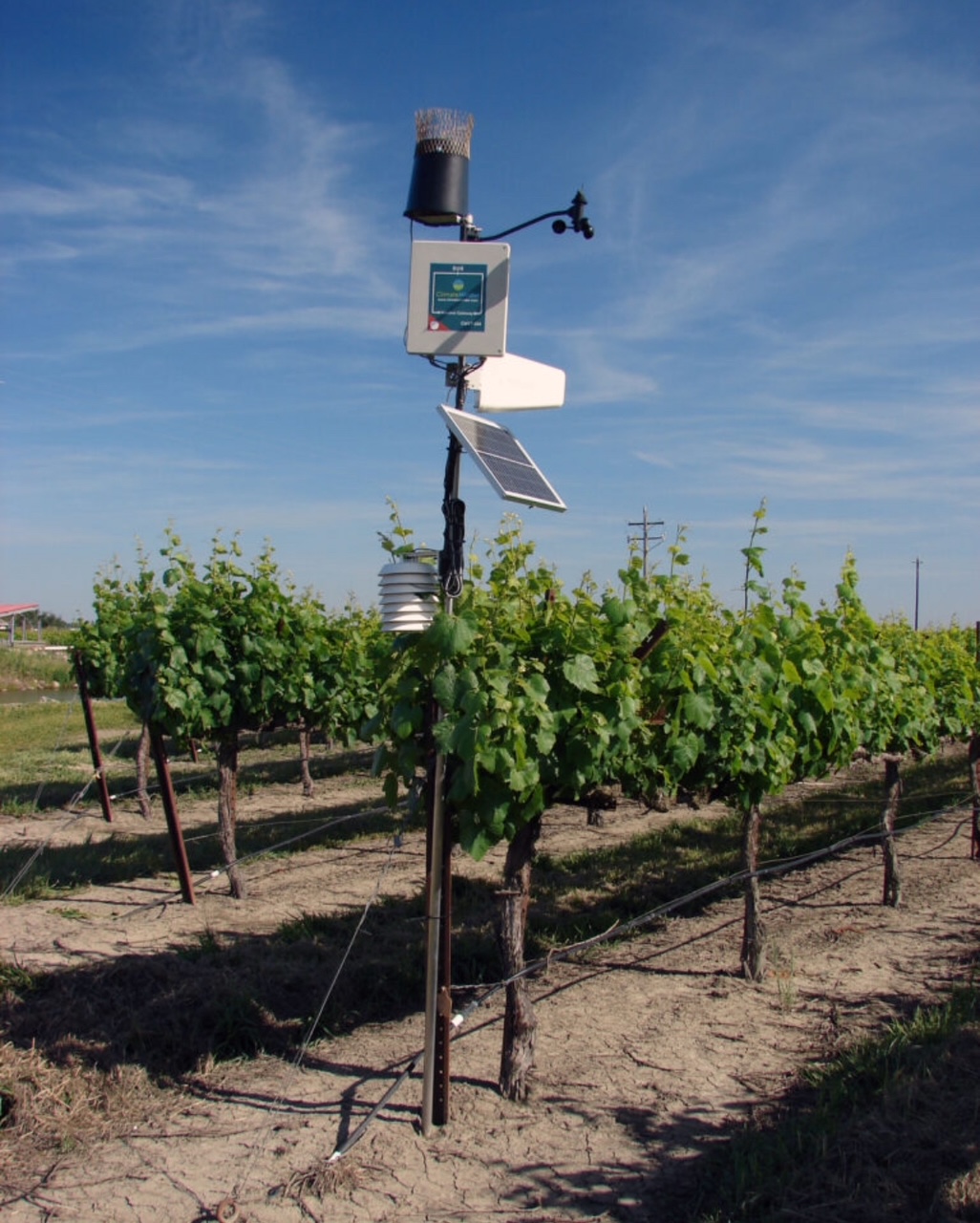
Weather monitoring station supporting efficient vineyard irrigation in Summerland, British Columbia
Weather monitoring can help an irrigation system respond to changing conditions in an Okanagan vineyard.

Why irrigation efficiency matters in the Okanagan
UBC Okanagan research describes irrigation as an important part of the region’s economy and landscape. Researchers also anticipate hotter, drier summers and increasing pressure on irrigation infrastructure as the climate changes.
This does not mean every property needs an entirely new irrigation system. Many existing systems can perform better after an assessment, pressure correction, controller upgrade, leak repair or redesign of inefficient zones.
A well-designed system can help address common problems such as:
Water spraying onto roads, sidewalks and buildings
Dry areas beside overwatered sections
Runoff on slopes
Irrigation continuing during rain
Lawn, shrubs and garden beds receiving the same schedule
Broken heads, leaking valves or damaged drip lines
Controllers operating on an unchanged seasonal schedule
What makes a modern irrigation system efficient?
1. Weather-responsive irrigation controllers
A traditional timer follows the same programmed schedule until someone changes it. A smart irrigation controller can adjust watering according to weather information and seasonal conditions. Depending on the equipment and installation, it can respond to temperature, rainfall and estimated landscape water demand.
Technology cannot compensate for poor system design. The controller must be programmed for the actual plants, soil, exposure, sprinkler type and permitted watering schedule at the property.
2. Soil-moisture sensors
Soil-moisture sensors help determine whether water is actually needed within the root zone. UBC Okanagan researchers developed and evaluated adaptive irrigation technology using wireless soil-moisture sensors. Their work demonstrated the value of moving beyond fixed schedules and using site information to guide irrigation decisions.
Soil-moisture monitoring technology in an Okanagan vineyard
Root-zone monitoring provides useful site information for irrigation decisions.

3. Separate irrigation zones
Lawns, trees, shrubs, vegetable gardens and ornamental beds do not have identical water requirements. Hydrozoning groups plants and landscape areas with similar requirements together. A professionally designed system may account for plant type, sun exposure, soil and drainage, slope, sprinkler application rate, pressure, flow and wind.
Irrigation control valves installed in a protected valve chamber
Separate control valves allow irrigation zones to be managed according to their actual requirements.

4. Drip irrigation for suitable planting areas
Drip irrigation applies water close to the soil and plant root zone. It can be an efficient option for garden beds, shrubs, trees, hedges, planters, orchards and vineyards when properly designed and maintained. Effective performance depends on filtration, pressure regulation, emitter selection, spacing, system capacity and appropriate run times.
5. Correct pressure and matched sprinklers
Excess pressure can create mist that drifts away or evaporates. Low or inconsistent pressure can leave parts of a zone without adequate coverage. Sprinklers within the same zone should have compatible application rates.
Lawn sprinkler coverage test for an efficient irrigation system
Testing sprinkler operation helps identify coverage, pressure and equipment problems.

6. Flow monitoring and leak detection
Small irrigation leaks may remain unnoticed because systems often run early in the morning or overnight. Flow monitoring can help identify unusual water movement associated with damaged pipes, broken sprinklers, stuck valves or blocked components. Periodic visual inspections remain important.
WaterMatic irrigation technician servicing an agricultural irrigation valve
Professional inspection and repair help irrigation equipment perform reliably.

Local irrigation considerations
Penticton
Penticton encourages property owners to inspect irrigation systems, repair leaks, avoid watering in hot or windy conditions and use plants suited to the Okanagan climate. Because restrictions can change, controller schedules should be checked regularly.
Summerland
Properties in Summerland range from residential landscapes to vineyards, orchards and larger agricultural sites. Irrigation design should begin with measured flow and pressure and an understanding of the property’s water source, soil and crop or landscape requirements.
Peachland
Sloped properties are common around Peachland. Long watering cycles can cause runoff before water penetrates the soil. Shorter cycles separated by soak periods, pressure regulation, drip irrigation and careful zoning may improve performance, depending on the site.
West Kelowna
West Kelowna promotes efficient practices including drip irrigation, smart timers, deeper and less frequent watering, and water-conscious landscaping. Schedules must follow current regulations for the property’s water utility.
Should you repair, upgrade or replace your system?
A complete replacement is not always necessary. Improvements might include a weather-based controller, rain or soil-moisture sensors, efficient sprinklers, drip irrigation, pressure correction, leak repair, improved zoning and seasonal reprogramming.
A new design may be appropriate when coverage is fundamentally poor, the landscape has changed significantly or the original system cannot support modern controls. The right decision begins with an on-site assessment.
Professional irrigation services across the Okanagan
WaterMatic Systems provides irrigation design, installation, diagnostics, repairs and smart irrigation upgrades in Penticton, Summerland, Peachland, West Kelowna and surrounding Okanagan communities.
With more than 30 years of irrigation experience and CID/CIT certification through the Irrigation Industry Association of British Columbia, we design systems around actual site conditions—not a one-size-fits-all watering schedule.
Request an irrigation assessment: Email: contact@watermaticsystems.com, or www.WaterMatic Systems.com
Frequently asked questions:
Can a smart controller be added to an existing irrigation system?
Often, yes. Compatibility depends on the valves, wiring, number of zones and condition of the existing system.
Is drip irrigation suitable for every landscape area?
Drip works well for many trees, shrubs, gardens and planting beds. Turf generally requires a different application method.
How often should an irrigation system be inspected?
Inspect it during spring startup and periodically throughout the watering season, as well as after landscaping work, freezing weather or unusually high water use.
Will smart irrigation automatically comply with watering restrictions?
Not necessarily. Local rules can change, so the controller must be updated for the property’s municipality or water utility.
Sources and further reading:
UBC Okanagan adaptive-irrigation research
UBC Okanagan irrigation and climate-adaptation project
Summerland Research and Development Centre
City of Penticton water-conservation guidance
District of Peachland conservation guidance
City of West Kelowna watering guidance